

When Returning Home Becomes the Greatest Risk: What Artemis II Reveals About Progress and Uncertainty
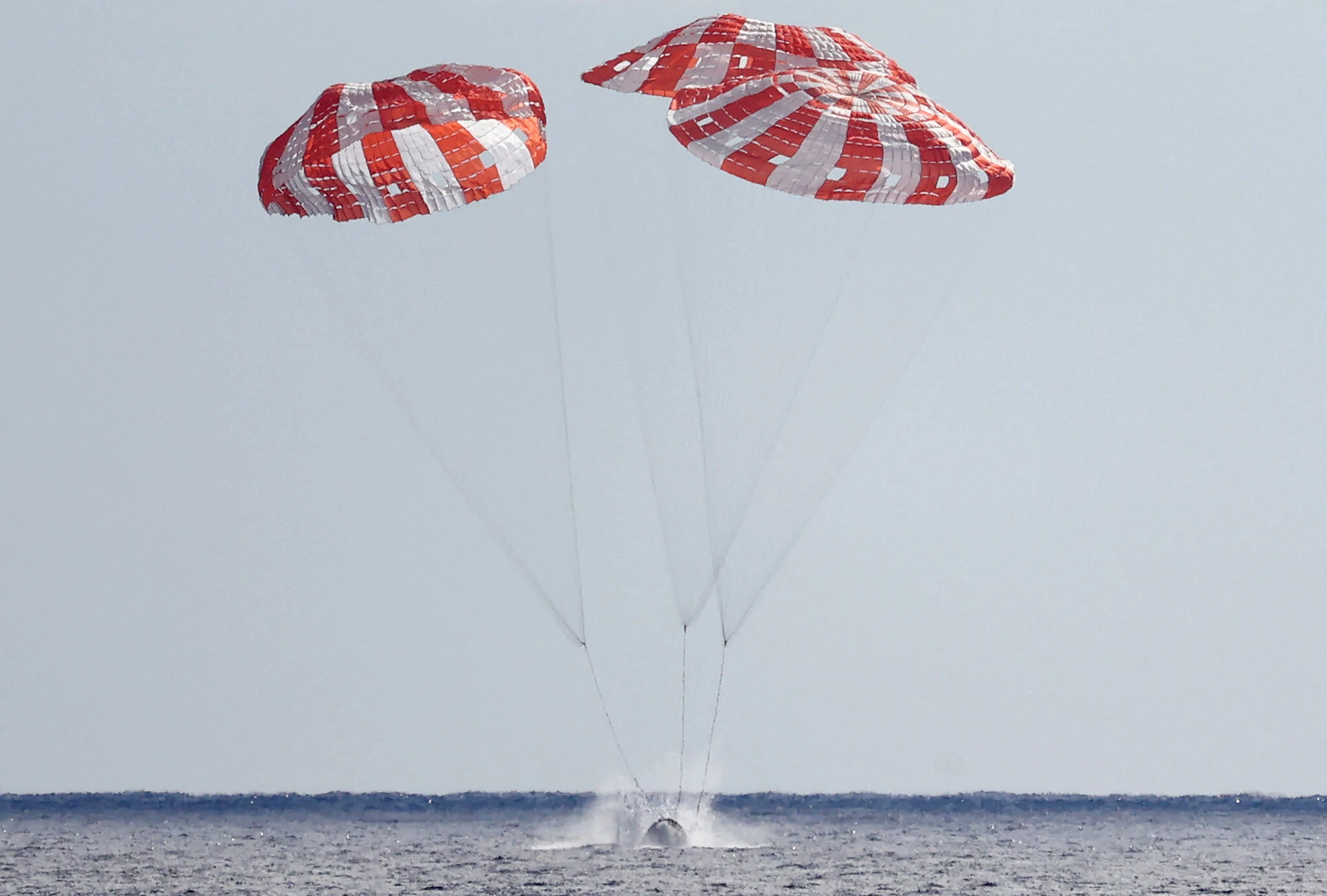
What does it mean when humanity can travel safely to the Moon—but cannot fully guarantee its return?As NASA prepares for its Artemis II mission, a critical question emerges beneath the surface of technological achievement: how much uncertainty is acceptable when human life depends on systems not yet fully understood?According to reporting by the The New York Times (April 9, 2026), the Artemis II mission—designed to carry astronauts around the Moon and back—faces a significant technical concern: a heat shield with known structural flaws.The heat shield is a critical component of any spacecraft. During re-entry into Earth’s atmosphere, it protects both the vehicle and its crew from extreme temperatures generated by high-speed friction. If the shield fails, the spacecraft could disintegrate, leaving no possibility of survival.Despite this, NASA officials maintain confidence in the mission’s safety. They argue that extensive testing, simulations, and adjustments—particularly a steeper and shorter re-entry trajectory—provide sufficient margin to protect the crew.The Artemis II mission represents a continuation of humanity’s deep space ambitions, echoing the legacy of the Apollo Program. The heat shield itself is based on Avcoat, a material used since that era, designed to absorb heat by gradually burning away during re-entry.However, during the earlier Artemis I mission, engineers observed unexpected behavior. Instead of burning uniformly, sections of the heat shield developed internal cracks due to gas buildup, causing pieces of material to break off suddenly. This revealed not just a design issue, but a deeper uncertainty in understanding how the material behaves under extreme conditions.Rather than replacing the heat shield for Artemis II, NASA chose to proceed with the existing design, modifying the spacecraft’s re-entry path to reduce thermal exposure. This decision has drawn criticism from some former astronauts and engineers, who argue that the underlying physics of the problem is not fully understood.Their concern is not simply technical—it is philosophical. When risks cannot be precisely calculated, who decides what level of danger is acceptable?History offers a sobering perspective. NASA has faced similar moments before, most notably during the Space Shuttle Challenger disaster and the Space Shuttle Columbia disaster. In both cases, warning signs were present but gradually normalized. Missions proceeded under assumptions of safety that later proved incomplete.The pattern is not unique to space exploration. It reflects a broader human tendency: familiarity with risk can create a false sense of control.In the short term, Artemis II may succeed, reinforcing confidence in NASA’s decision-making. But if failure occurs, the consequences would be immediate and irreversible.In the long term, the mission could reshape how risk is understood in space exploration. It may influence future missions to the Moon and Mars, and redefine the balance between ambition and caution in high-stakes technological systems.Beyond institutions and engineering, the human dimension remains central. The astronauts aboard Artemis II are fully aware of the risks. Their participation reflects a willingness to move forward despite uncertainty—a defining trait of human exploration.Yet the question remains:How much uncertainty is acceptable in the pursuit of progress?Artemis II is more than a mission to the Moon. It is a test of judgment in the face of incomplete knowledge. Reaching space has always been a triumph of human intelligence. Returning safely has always depended on something deeper: the ability to recognize the limits of that intelligence.As humanity pushes further into the unknown, one question lingers quietly:Are we advancing with true understanding—or with confidence that may exceed it?